Tables
English tables represent some of the most versatile and inventive forms in the history of furniture. From the late 17th century through the Georgian period and beyond, they were made to serve a wide range of purposes while also expressing taste, status, and refinement. The finest examples combine elegance, proportion, and superb craftsmanship, whether in richly figured mahogany, walnut, oak, giltwood, or japanned decoration, and often possess a sculptural presence that allows them to command a room with ease.
Their development was shaped by architecture, changing patterns of domestic life, and the wider decorative arts of Europe and Asia. English makers responded with remarkable imagination, producing tables that could be architectural and imposing, light and graceful, or highly original in form and ornament. At their best, they reveal the confidence and sophistication of English design, uniting practicality with beauty in a way that is both immediate and enduring.
Below you will find pieces that embody this tradition, including rare and important examples chosen for their quality, character, and historical significance.
-
 The Bridehead Library Table: A William IV Gothic revival Oak Library table
 -
A George III Regency Period Library Table, Attributed to John Mclean
-
A George III mahogany silver table.
-
A 17th Century red lacquer table with incised bird and flower motifs
-
A GEORGE II IRISH MAHOGANY SIDE TABLE
-
A GEORGE I GILT-GESSO TABLE
-
A GEORGE II GILTWOOD TABLE ATTRIBUTED TO BENJAMIN GOODISON AND WILLIAM KENT
-
A PAIR OF GEORGE III PAINTED AND GILDED SIDE TABLES ATTRIBUTED TO SEDDON & SONS
-
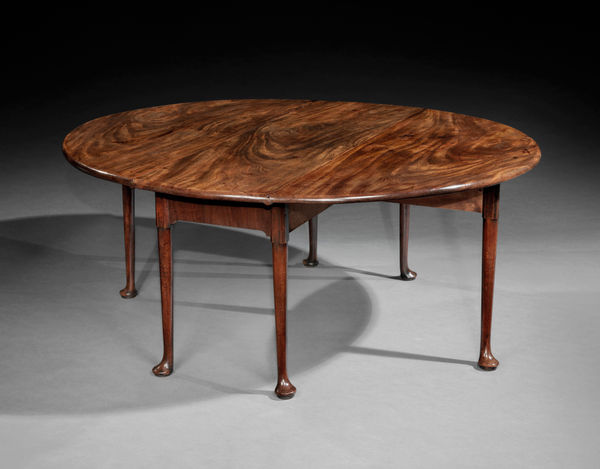
A GEORGE II MAHOGANY DROP-LEAF TABLE
-
A RED LACQUER AND POLYCHROME DECORATED RECESSED LEG TABLE
-
A PAIR OF CHINESE GILT LACQUER TABLES, TIAOZHUO