Japanese Lacquer
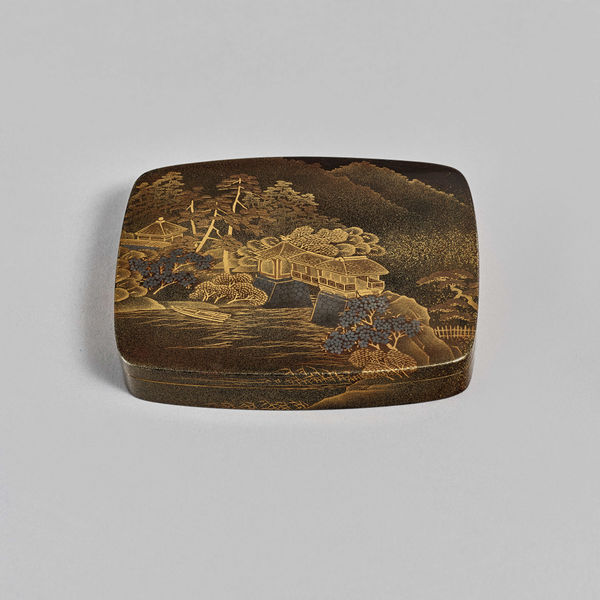
Japanese lacquer stands among the most refined and technically demanding achievements in the decorative arts. Built up through numerous painstaking stages, often over long periods of time, the finest works combine extraordinary skill with elegance, restraint, and a remarkable sensitivity to surface. Gold, silver, and subtle relief are used not for excess, but for depth, atmosphere, and quiet brilliance, giving these objects a presence unlike almost any other material.
Its history is one of both continuity and invention. Rooted in long established techniques and aesthetics, Japanese lacquer developed through courtly taste, religious patronage, and the culture of the scholar and warrior elite, while later works also responded to the interests of foreign collectors and export markets. Across these different contexts, the finest pieces remain distinguished by their precision, sophistication, and extraordinary beauty.
Japanese Metalwork
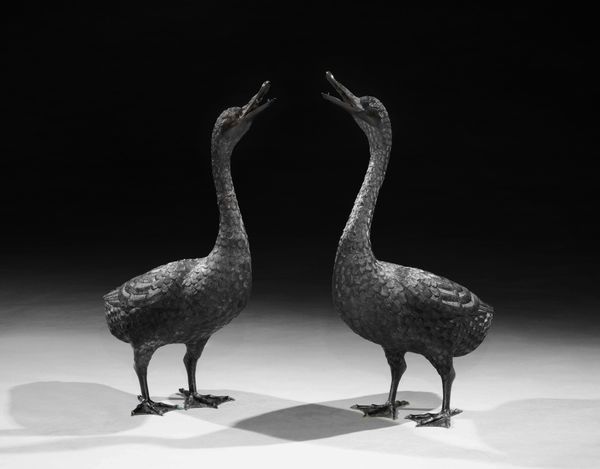
Japanese metalwork represents one of the most technically accomplished and aesthetically nuanced traditions in the decorative arts. From early ritual bronzes to the finely worked alloys of later centuries, the medium has been shaped by a deep understanding of material and process. Whether cast, hammered, or intricately inlaid, the finest works reveal a balance between strength and delicacy, surface and form. Subtle patination, precise engraving, and the controlled use of gold and silver lend these objects a quiet richness, where craftsmanship is inseparable from artistic expression.
Its history is marked by both continuity and transformation. Emerging from early utilitarian and ceremonial objects, metalwork evolved through religious patronage, courtly refinement, and the culture of the samurai, where sword fittings and armour became highly sophisticated art forms. In the Edo and Meiji periods, the field expanded further, embracing domestic wares, sculptural objects, and works created for international audiences. Across these changing contexts, Japanese metalwork maintained a distinctive identity, grounded in technical mastery and a sensitivity to material that remains central to its enduring appeal.
Below you will find works that embody these traditions, including rare and important examples chosen for their quality, character, and artistic significance.
-
 A 17th Century Japanese lacquer box depicting, Inrō, a Fox and Monkey
 -
An inlaid mother-of-pearl Taming Tiger Lohan figure lacquer box
-
A Japanese circular Gold Lacquer box. Edo Period
-
A JAPANESE Metal BOX AND COVER WITH DRAGON AND TIGER. LATE 19TH CENTURY
-
A Japanese butterfly shaped Gold lacquer box. Meiji Period
-
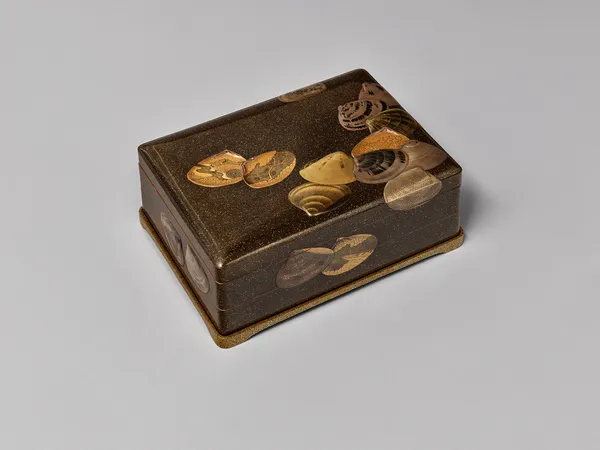
A Fine Japanese Lacquer Shell Matching Box by Hara Yōyūsai
-
A JAPANESE GOLD AND SILVER LACQUER BOX
-
A JAPANESE GOLD LACQUER 'SPRING & AUTUMN' WRITING BOX (SUZURIBAKO)
-
Inlaid iron box and cover signed Ryuosai Masatoshi Nasu 龍翁齋政壽作鐵嵌漆蓋盒
-
A Japanese Iron Box with Gold, Silver and Bronze Inlay signed Jomi Eisuke
-
A gold-lacquer presentation tebako (box for personal accessories) with senior imperial provenance
-
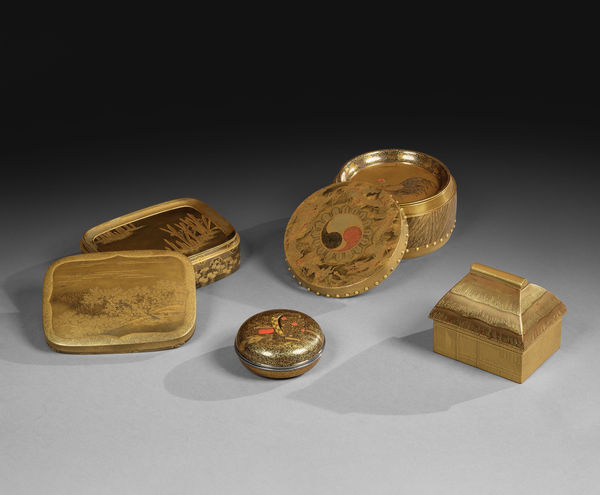
A GROUP OF BOXES
-
An unusual Japanese lacquered melon box, 日本黑漆描金瓜形盒
-
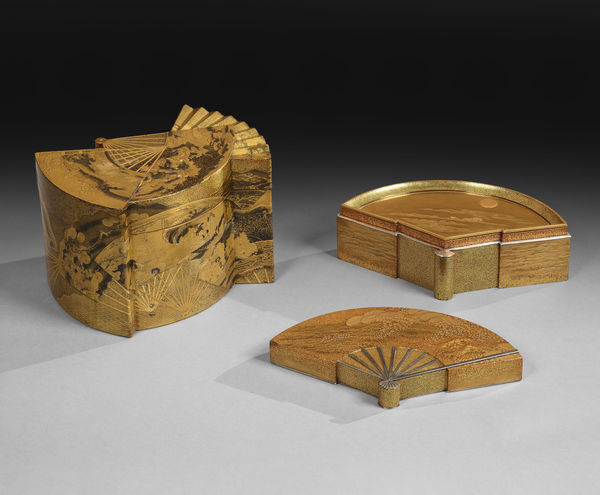
TWO BOXES IN THE FORMS OF FANS
-
A Japanese Lacquer Incense Box (Kōgō) By Yamazaki Mushu
-
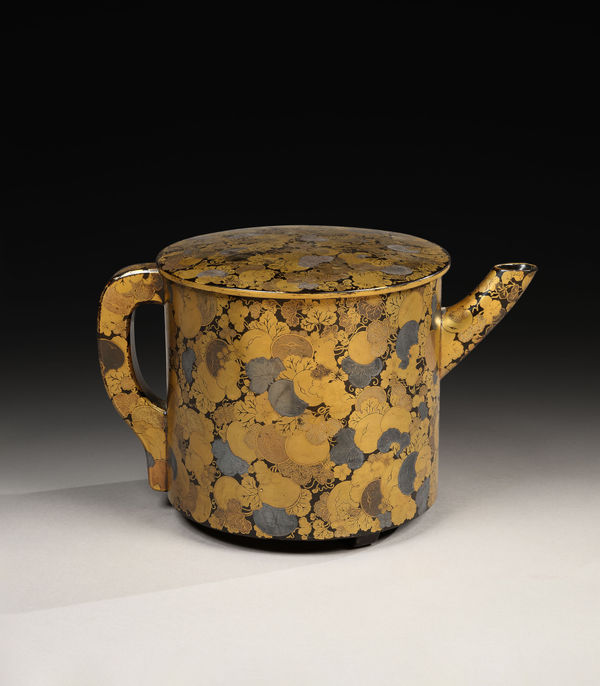
A SILVER AND GOLD MAKI-E LACQUER YUTO AND COVER
-
A Japanese incense box
-
A Shibayama-style inlaid carved mother-of-pearl rectangular Kodansu (small cabinet)
-
An octagonal lacquer box with mandarin ducks amongst maple leaves
-
A japanese lacquered kodansu 日本漆器小櫃
-
A Japanese kogo with feather design in togidashi
-
A Fine Black Lacquer Document Box, Decorated with a Basket of Seashells (Kai-zukushi)
-
A Two-Tiered Inlaid Japanese Radial Lacquer Box
-
BOXES IN THE FORMS OF A CRANE
-
Inlaid Shibuichi Kogo, signed Kosai
-
A Gold Lacquer Box in the Form of a Kaki (Persimmon)
-
A PAIR OF JAPANESE BRONZE FIGURES OF GEESE